
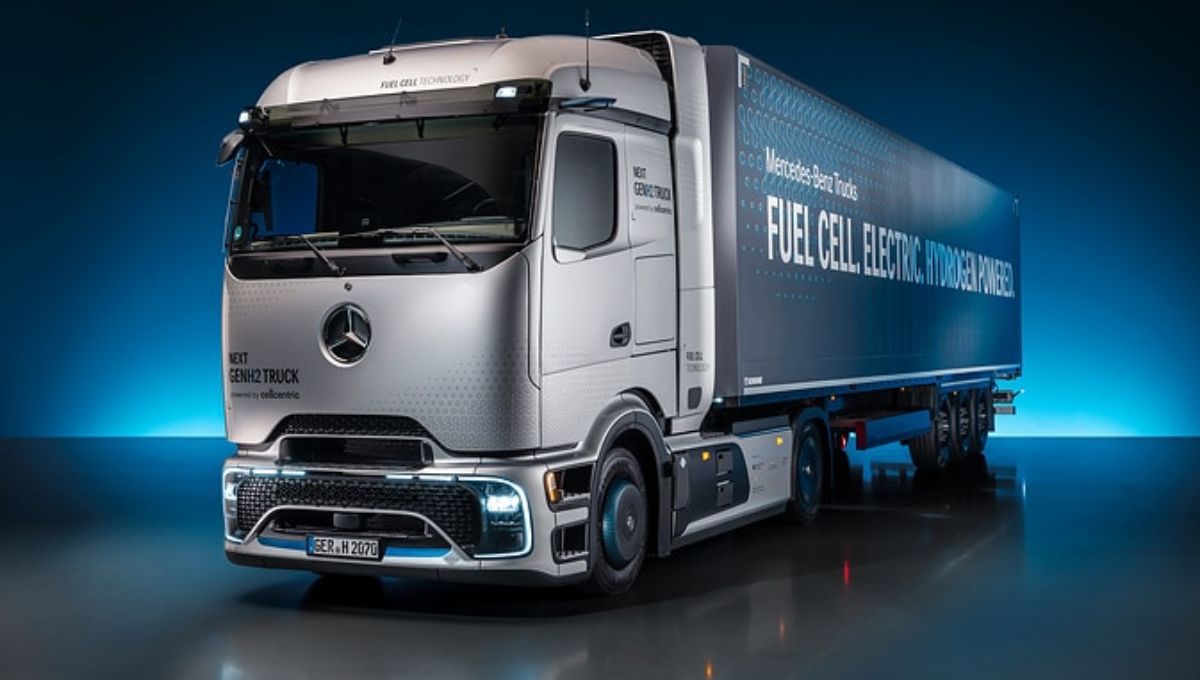
The global commercial vehicle industry is standing at a historic crossroads. Regulations are tightening, logistics companies are under pressure to decarbonize, and traditional diesel-powered freight transport is increasingly seen as unsustainable. Against this backdrop, Daimler Truck has announced plans to build 100 advanced hydrogen-powered semi-trailer tractors, a move that signals far more than a limited pilot program. It represents a calculated step toward redefining long-haul transportation.
For Daimler Truck, a company with decades of engineering heritage and global reach, hydrogen is not a speculative technology. It is part of a broader, long-term vision to deliver zero-emission freight solutions that match the performance, range, and uptime demanded by real-world logistics operations.
Why Hydrogen Matters for Heavy-Duty Trucks
Battery-electric trucks have made significant progress in urban and regional delivery segments. However, long-haul freight presents unique challenges: extended driving ranges, heavy payloads, minimal downtime, and consistent performance across varied climates. Hydrogen fuel cell technology directly addresses these constraints.
Hydrogen-powered trucks generate electricity onboard through a fuel cell, emitting only water vapor. Refueling times are comparable to diesel, and the energy density of hydrogen enables long distances without excessive weight penalties. For fleet operators who cannot afford extended charging stops, hydrogen offers a practical alternative.
Daimler Truck’s decision to produce 100 advanced H2-powered tractors reflects confidence that the technology is maturing beyond experimental stages and into operational readiness.
Understanding the Technology Behind Daimler Trucks’ H2 Tractors
Fuel Cell Architecture and Powertrain Design
At the heart of these new semi-trailer tractors lies a next-generation fuel cell system designed for durability, efficiency, and scalability. Daimler Truck has focused on optimizing the balance between power output and fuel consumption, ensuring the trucks can handle heavy loads over long distances without compromising reliability.
The electric drivetrain delivers smooth torque delivery, reducing mechanical stress compared to combustion engines. This not only improves driving comfort but also lowers long-term maintenance requirements.
Hydrogen Storage and Safety Engineering
Hydrogen storage has historically raised safety concerns, particularly in heavy-duty applications. Daimler Truck addresses this with high-pressure composite tanks engineered to withstand extreme conditions, including impacts and temperature fluctuations.
Multiple safety layers, continuous monitoring systems, and automated shutdown protocols ensure that hydrogen handling meets or exceeds existing commercial vehicle safety standards.
Why Build 100 Units Instead of a Smaller Pilot
A common question is why Daimler Truck chose to build as many as 100 hydrogen-powered semi-trailer tractors rather than limiting production to a smaller demonstration fleet.
The answer lies in validation at scale. Real-world freight operations involve diverse routes, drivers, climates, and load conditions. By deploying 100 units, Daimler Truck can collect meaningful operational data, identify performance patterns, and refine the technology under true commercial pressure.
This scale also signals seriousness to infrastructure partners, policymakers, and logistics companies. It tells the market that hydrogen trucking is not a laboratory experiment, but a viable commercial pathway.
Infrastructure: The Missing Piece Daimler Truck Is Planning Around
Hydrogen trucks cannot succeed in isolation. Fueling infrastructure remains one of the biggest hurdles to widespread adoption. Daimler Truck’s strategy acknowledges this reality.
By introducing a limited but substantial fleet, the company can coordinate deployments along defined freight corridors where hydrogen stations either exist or are planned. This approach supports the gradual build-out of infrastructure without requiring immediate nationwide coverage.
The 100-truck initiative effectively creates demand certainty, encouraging energy providers to invest in hydrogen production and distribution.
Read more:- Code Vein 2 Companions Guide: Which Ally Changes the Game the Most?
Operational Benefits for Fleet Owners
Comparable Uptime to Diesel
One of the strongest selling points of Daimler Trucks’ hydrogen tractors is refueling speed. Unlike battery-electric trucks that may require extended charging breaks, hydrogen refueling can be completed in minutes. This keeps trucks on the road and maintains existing logistics schedules.
Lower Noise and Improved Driver Experience
Electric drivetrains are inherently quieter than combustion engines. Drivers benefit from reduced noise and vibration, leading to less fatigue over long routes. This can translate into improved safety and job satisfaction, a critical factor in an industry facing driver shortages.
Long-Term Cost Predictability
While hydrogen vehicles currently involve higher upfront costs, Daimler Truck is betting on long-term economic balance. Reduced maintenance, fewer moving parts, and potential fuel price stabilization could make hydrogen competitive over the vehicle’s lifecycle.
Environmental Impact Beyond Zero Tailpipe Emissions
The environmental promise of hydrogen trucks depends heavily on how hydrogen is produced. Daimler Truck’s strategy aligns with the growing availability of green hydrogen produced using renewable energy.
When paired with green hydrogen, these semi-trailer tractors offer true end-to-end decarbonization, significantly reducing the carbon footprint of long-haul freight without shifting emissions upstream.
How Daimler Truck’s Approach Differs from Competitors
While several manufacturers are exploring hydrogen, Daimler Truck stands out for its measured, engineering-led approach. Rather than making bold marketing claims, the company is focusing on controlled deployment, data-driven refinement, and close collaboration with customers.
This pragmatic strategy reflects Daimler Truck’s understanding that fleet operators value reliability and total cost of ownership above experimental innovation.
Market Implications for the Global Trucking Industry
The decision to build 100 advanced hydrogen-powered tractors sends a strong signal to the market. It suggests that hydrogen is no longer a fringe solution but a serious contender for long-haul decarbonization.
If successful, this initiative could accelerate regulatory support, unlock infrastructure investment, and push competitors to advance their own hydrogen programs.
Challenges That Still Remain
Despite the optimism, challenges persist. Hydrogen supply chains must scale sustainably, costs must decline, and regulatory frameworks need harmonization across regions.
Daimler Truck’s project does not eliminate these challenges, but it creates a real-world testing ground where solutions can be developed collaboratively.
The Road Ahead for Daimler Truck
This 100-unit build is unlikely to be the end goal. Instead, it represents a bridge between prototype development and series production. Lessons learned from these trucks will shape future models, manufacturing processes, and partnerships.
For Daimler Truck, hydrogen is not a replacement for battery-electric solutions but a complementary technology. Together, they form a diversified portfolio designed to meet the varied demands of global freight transport.
FAQs
What makes Daimler Truck’s hydrogen tractors different from electric trucks?
Hydrogen tractors offer faster refueling and longer range, making them more suitable for long-haul operations where downtime must be minimized.
Are hydrogen trucks safe for everyday freight use?
Yes. Daimler Truck uses advanced storage systems, continuous monitoring, and strict safety standards to ensure safe operation under commercial conditions.
When could hydrogen trucks become widely available?
Widespread availability depends on infrastructure growth and cost reductions, but initiatives like this 100-truck deployment are key steps toward broader adoption.
Will hydrogen replace diesel completely?
Hydrogen is expected to complement other zero-emission technologies rather than fully replace them, especially in long-distance and heavy-load applications.