
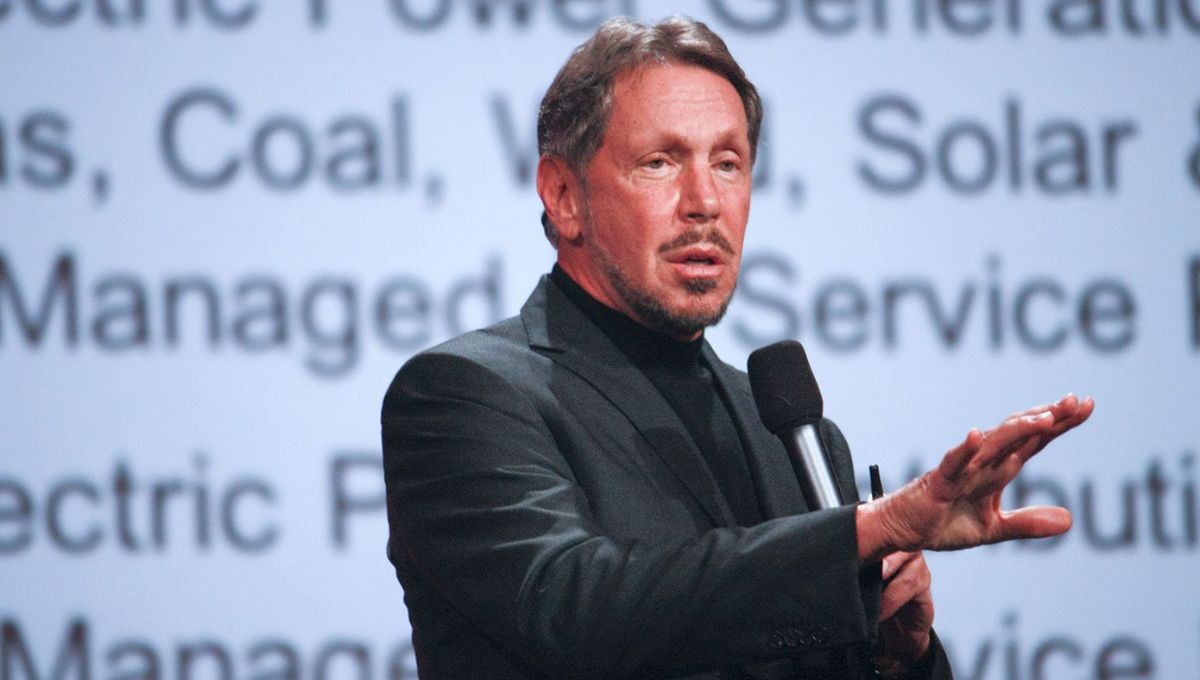
Oracle cofounder Larry Ellison has never been known for vague opinions or cautious language. Over decades, he has helped shape enterprise software, databases, cloud infrastructure, and large-scale computing systems that power governments and Fortune 500 companies. So when Ellison speaks critically about artificial intelligence, particularly about the limitations shared by models like ChatGPT, Gemini, Llama, and others, the industry listens carefully.
According to Ellison, the biggest problem facing all modern AI models is not raw computing power, model size, or even regulation. The real issue lies deeper: AI systems fundamentally lack verified, authoritative, and continuously updated ground truth. This structural weakness, Ellison argues, limits trust, accuracy, and real-world usefulness—especially in high-stakes environments such as healthcare, governance, finance, and national security.
This article explores Ellison’s perspective in depth, examines why this problem exists across all major AI platforms, and analyzes its implications for the future of artificial intelligence.
Understanding Larry Ellison’s Perspective on AI
Larry Ellison approaches AI not as a novelty but as an enterprise system. His career has been built on the idea that data integrity, accuracy, and governance matter more than flashy interfaces or experimental features.
From Ellison’s viewpoint, AI models are impressive pattern recognizers, but they are not knowledge systems in the traditional sense. They do not “know” facts. They generate outputs based on probabilities learned from vast datasets. This distinction is critical—and it is where the biggest problem begins.
Ellison emphasizes that without a reliable connection to authoritative, real-time data sources, AI models inevitably produce confident but flawed outputs. This is not a minor inconvenience; it is a structural weakness.
The Core Problem: Lack of Grounded, Authoritative Truth
What does Ellison mean by “The Biggest Problem”?
Ellison’s concern is not about hallucinations in isolation, nor is it about occasional errors. His argument is broader and more systemic.
All current large language models:
- Are trained on historical data
- Cannot independently verify facts
- Do not inherently distinguish truth from popularity
- Cannot guarantee accuracy in dynamic, real-world contexts
In simple terms, AI models generate answers that sound right, not provably right answers.
Why This Problem Affects Every Major AI Model?
ChatGPT, Gemini, Llama, and Others Share the Same Limitation
Despite differences in architecture, training methods, and corporate backing, today’s leading AI models all rely on the same foundational approach:
- Large-scale pretraining on massive datasets
- Statistical pattern prediction
- Limited real-time verification
This means the problem Ellison identifies is not a flaw of a single company or model. It is a limitation of the entire current generation of AI technology.
Even models with live data access or browsing capabilities still:
- Depend on external sources
- Cannot guarantee source accuracy
- Lacks a built-in mechanism for truth validation
Why Size and Scale Do Not Solve the Problem?
One common assumption in the AI industry is that larger models with more parameters will naturally become more accurate. Ellison strongly disagrees with this idea.
Increasing scale may:
- Improve fluency
- Enhance contextual understanding
- Reduce some errors
But it does not solve the core issue of truth verification.
A larger model can produce more convincing misinformation just as easily as a smaller one. Without authoritative grounding, scale amplifies risk rather than eliminating it.
Read more:- The New GSX-8R Review: Where Sportbike Style Meets Intelligent Engineering
The Enterprise Risk: Why Businesses Should Care
AI in High-Stakes Environments
Ellison’s warnings are especially relevant for enterprises deploying AI in:
- Healthcare diagnostics
- Financial decision-making
- Legal analysis
- Government operations
- Defense and security
In these domains, even small inaccuracies can have massive consequences. An AI system that confidently provides incorrect information can:
- Trigger financial losses
- Create legal exposure
- Undermine public trust
- Cause real-world harm
From an enterprise perspective, AI that cannot be trusted is not just unhelpful—it is dangerous.
The Difference Between Intelligence and Reliability
Ellison often draws a clear distinction between intelligence and reliability. AI models can appear intelligent while remaining fundamentally unreliable.
Reliability requires:
- Verified data sources
- Clear data lineage
- Accountability mechanisms
- Continuous updates from trusted systems
Without these, AI outputs remain probabilistic guesses, not dependable answers.
Oracle’s Data-Centric View of the AI Future
Ellison’s critique also reflects Oracle’s broader philosophy. Oracle has long focused on structured data, enterprise databases, and controlled environments.
From this standpoint, the future of AI is not just about better models—it is about:
- Integrating AI directly with authoritative databases
- Embedding governance at the data level
- Ensuring traceability and auditability
Ellison believes AI must be built on top of trusted systems of record, not scraped data alone.
Why This Is a Trust Problem, Not a Talent Problem?
Many assume that AI inaccuracies stem from immature technology or insufficient training. Ellison reframes the issue as a trust problem.
Users trust AI outputs because:
- They are well-written
- They sound confident
- They appear authoritative
But confidence is not correctness.
Ellison warns that over-trusting AI without verification could lead to widespread misinformation at scale—far beyond what human systems have ever produced.
Implications for Regulators and Policymakers
Ellison’s perspective has significant implications for regulation. If AI systems cannot guarantee truth, then:
- Clear accountability is required
- Human oversight becomes essential
- Use cases must be carefully limited
This suggests a future where AI is:
- A decision support tool, not a decision maker
- Closely monitored in sensitive domains
- Integrated with verified data systems
The Path Forward: What Needs to Change
Ellison does not argue against AI itself. Instead, he calls for a more responsible architecture.
Key changes include:
- Stronger integration with authoritative data sources
- Clear labeling of uncertainty
- Better enterprise controls
- Reduced reliance on unverified public data
Only by addressing these foundational issues can AI move from impressive demonstrations to trusted infrastructure.
A Necessary Reality Check for AI Optimism
Larry Ellison’s warning cuts through the hype surrounding artificial intelligence. While AI models are undeniably powerful, they are not infallible—and pretending otherwise is risky.
The biggest problem facing all AI models today is not innovation speed or competition. It is trust. Until AI systems can reliably ground their outputs in verified truth, their role must remain carefully constrained.
Ellison’s perspective serves as a reminder that technological progress must be paired with responsibility, especially when the stakes are high.
FAQs
What is the biggest problem Larry Ellison sees in AI models?
He believes the core issue is the lack of verified, authoritative ground truth, which limits trust and accuracy.
Does this problem apply to all AI models?
Yes. According to Ellison, all current large language models share this limitation, regardless of company or design.
Are AI hallucinations the main concern?
Hallucinations are a symptom. The deeper issue is the absence of built-in truth verification.
Can bigger models fix this problem?
No. Increasing model size improves fluency but does not guarantee correctness or reliability.