
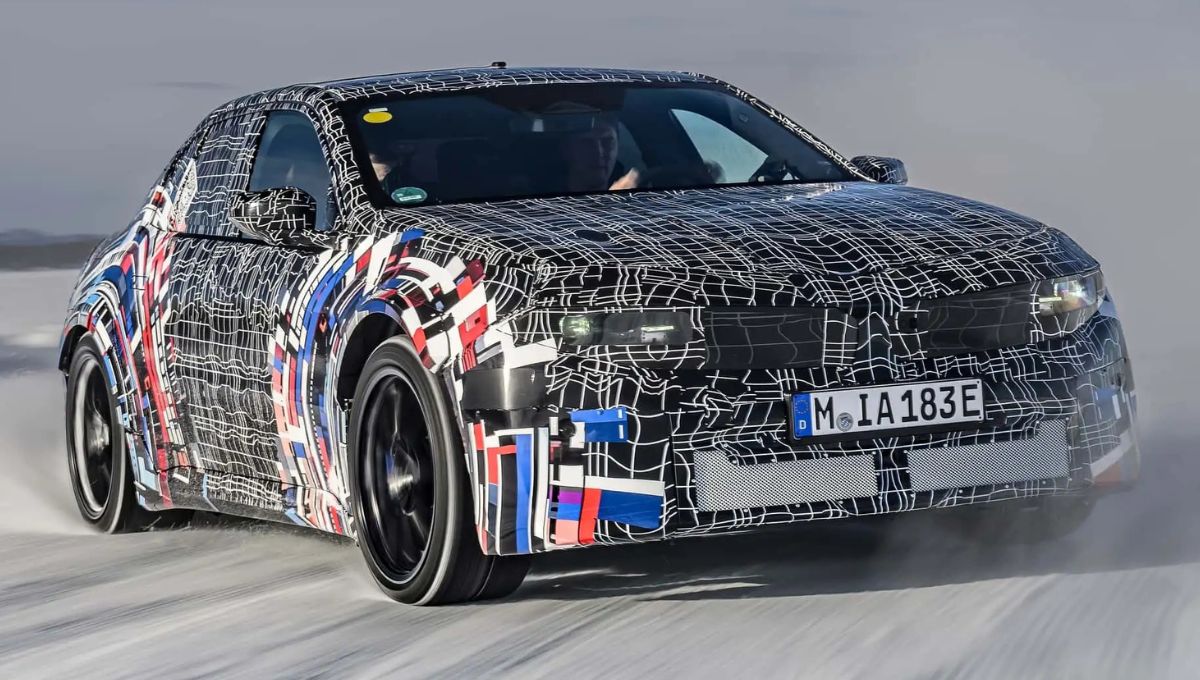
Few performance cars carry the emotional weight of the BMW M3. For decades, the M3 has stood as a benchmark for driving purity, mechanical feedback, and unmistakable engine character. As BMW prepares to electrify this legendary nameplate, the company faces one of its most complex challenges yet: how to preserve the soul of the M3 without a traditional internal combustion engine.
Rather than abandoning sound altogether or resorting to generic electric whines, BMW is taking a deliberate and deeply considered approach. The upcoming electric M3 will feature a sound design that blends the acoustic signatures of some of BMW’s most iconic engines. This decision reflects not nostalgia for its own sake, but a strategic effort to maintain emotional continuity while embracing the future.
Why Sound Still Matters in the Electric Age
Electric vehicles are often praised for their silence, but for performance enthusiasts, sound has never been mere noise. It is feedback. It communicates speed, load, and intent. In the M3’s case, sound has always been inseparable from identity, whether it came from a high-revving naturally aspirated inline-six or a turbocharged powerhouse.
BMW understands that removing sound entirely would fundamentally alter the M experience. Instead, engineers and sound designers have focused on crafting an audio profile that evolves dynamically with throttle input, vehicle speed, and driving modes. This ensures the sound remains functional and expressive, not just theatrical.
Blending BMW’s Engine Heritage Into One Sonic Identity
What sets the electric M3 apart from many synthetic sound efforts is its conceptual foundation. BMW is not inventing a sound from scratch. Instead, it carefully blends tonal characteristics inspired by multiple legendary BMW engines. These influences are not meant to be immediately recognizable as a single past model, but rather to evoke familiarity at an emotional level.
The result is a layered soundscape that captures the urgency of high-revving engines, the torque-rich presence of turbocharged units, and the mechanical precision BMW is known for. This approach allows the electric M3 to feel connected to its lineage without being trapped by it.
How the Sound Adapts to Driving Modes
A key element of BMW’s strategy lies in adaptability. The electric M3’s sound profile is expected to change based on selected driving modes, mirroring how exhaust notes and throttle response differ in traditional M cars.
In comfort-oriented modes, the sound remains subtle and refined, reinforcing the car’s usability as a daily driver. Switch to a sportier setting, and the audio becomes more aggressive, more urgent, and more emotionally engaging. On track-focused modes, the sound sharpens further, emphasizing performance cues that help drivers intuitively understand what the car is doing beneath them.
Sound as Functional Feedback, Not a Gimmick
BMW’s engineers have been careful to avoid the trap of novelty. The sound is not meant to imitate a gasoline engine directly, nor is it designed purely for external drama. Instead, it works in harmony with the vehicle’s acceleration and chassis dynamics, providing meaningful feedback to the driver.
This approach reinforces BMW’s commitment to driving engagement. Rather than replacing mechanical sensations with artificial tricks, the electric M3 uses sound as a communication tool, enhancing driver confidence and immersion without overwhelming the senses.
Maintaining Trust With the M Community
Electrification can be unsettling for long-time enthusiasts, especially when it involves a model as revered as the M3. BMW’s sound strategy plays a critical role in maintaining trust with its core audience. By openly acknowledging the emotional importance of engine sound, BMW signals that it respects its heritage and its customers.
At the same time, the brand avoids positioning the electric M3 as a replacement for the past. Instead, it presents the car as an evolution, one that honors previous generations while redefining performance for a new era.
Engineering Authenticity Into the Experience
Authenticity is a recurring theme in BMW’s development philosophy, and the electric M3 is no exception. The sound design process involves collaboration between engineers, designers, and driving dynamics specialists. This ensures that the audio experience aligns with how the car accelerates, brakes, and handles.
The result is a cohesive performance package where sound supports the driving experience rather than distracting from it. This level of integration is essential for maintaining credibility among enthusiasts who are quick to spot superficial solutions.
What This Means for the Future of M Cars
The electric M3 represents more than a single product; it sets the tone for BMW M’s electric future. By demonstrating that performance emotion can survive electrification, BMW lays the groundwork for future models that balance sustainability with excitement.
Rather than diluting the M brand, this approach has the potential to expand it, attracting a new generation of drivers without alienating loyal fans.
Read more:- Manx R Review: Where Motorsport Legacy Meets Modern Engineering
A Thoughtful Transition, Not a Compromise
The electric BMW M3’s sound strategy shows that progress does not require abandoning identity. By blending the spirit of its greatest engines into a modern, adaptive audio experience, BMW proves that emotion and electrification can coexist.
For enthusiasts, this signals a future where performance remains thrilling, expressive, and unmistakably M, even without pistons and exhaust pipes.