
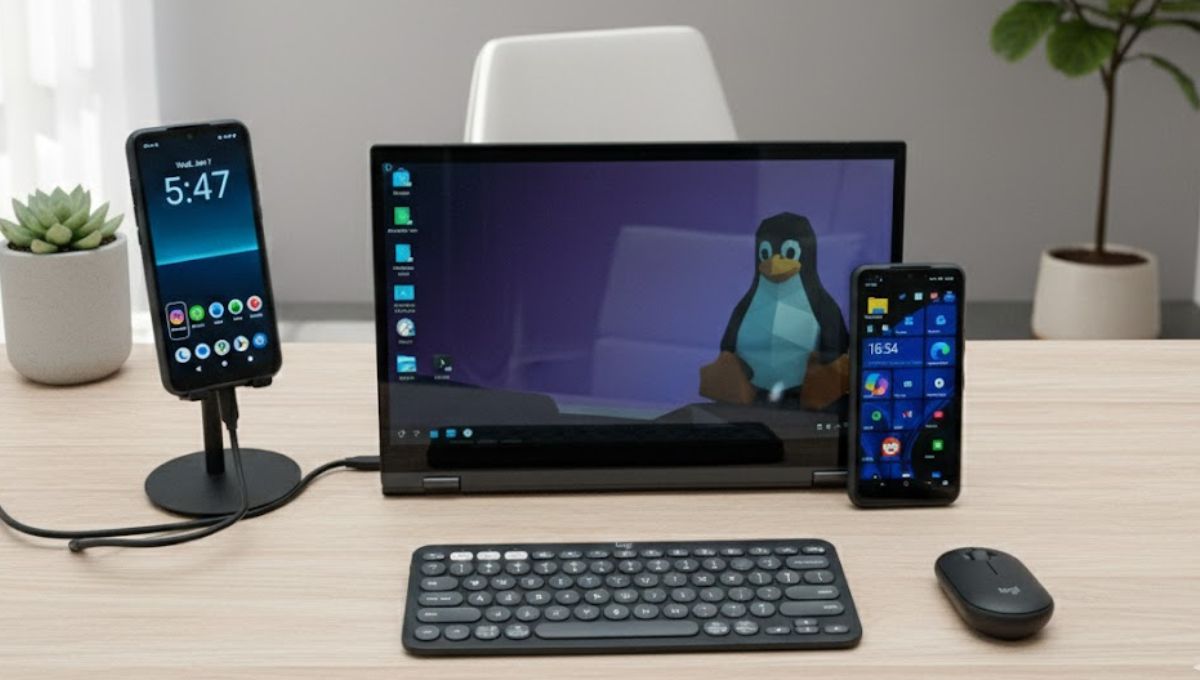
Every so often, a piece of gear appears that doesn’t just upgrade a category but questions why the category exists in its current form at all. This week’s gear news does exactly that. Apple’s AI Wearable has emerged not as a flashy consumer gadget, but as a strategic statement about where personal technology is headed. Alongside it, a multi-boot smartphone capable of running Android, Linux, and Windows hints at a future where hardware flexibility becomes as important as raw performance.
While both devices deserve attention, Apple’s AI Wearable stands out for what it represents: a transition from screen-first interactions to intelligence-first experiences. Instead of asking users to adapt to technology, the device promises to adapt to the user.
What Exactly Is Apple’s AI Wearable?
Apple’s AI Wearable is not positioned as a traditional smartwatch or fitness tracker. Instead, it functions as a contextual intelligence companion—always present, always learning, and designed to operate mostly in the background.
Rather than relying on constant touch input or app navigation, the wearable focuses on:
- Passive data awareness
- Contextual AI processing
- Natural language interaction
- Minimalist, glance-based feedback
This shift suggests Apple is rethinking what “wearable” truly means in an era dominated by artificial intelligence.
Design Philosophy: Less Screen, More Intelligence
Apple’s design strategy here is deliberate. Unlike conventional wearables that compete on display size and brightness, Apple’s AI Wearable prioritizes subtlety.
The device is expected to feature:
- A compact, lightweight form factor
- Discreet visual indicators instead of full-screen interaction
- Haptic feedback for notifications
- Seamless integration with other Apple devices
The goal is to reduce cognitive load. Instead of checking screens dozens of times a day, users receive only the most relevant information at the right moment.
This design approach aligns with Apple’s long-standing belief that the best technology fades into the background.
Read more:- An Electric M3 With a Soul? BMW’s Bold Plan to Recreate Its Most Iconic Engine Sounds
Apple’s AI Wearable and On-Device Intelligence
One of the most important aspects of Apple’s AI Wearable is its emphasis on on-device AI processing. Rather than sending every interaction to the cloud, the wearable handles many tasks locally.
This has several implications:
Privacy and Trust
Apple has built its brand on privacy, and this wearable reinforces that stance. By processing sensitive data such as voice inputs, behavioral patterns, and health signals on the device itself, Apple reduces exposure risks and enhances user trust.
Faster Responses
On-device AI enables near-instant reactions. Whether it’s responding to a spoken command or adjusting behavior based on context, the wearable does not rely on network latency.
Smarter Over Time
The AI adapts continuously, learning user preferences, routines, and communication styles. Over time, the device becomes more predictive and less reactive.
How Apple’s AI Wearable Changes Daily Life
The true test of any wearable is how seamlessly it integrates into everyday routines. Apple’s AI Wearable aims to enhance daily life without demanding attention.
Context-Aware Assistance
The wearable understands situational context. It knows when you are walking, driving, working, or resting. Based on that awareness, it adjusts notifications, suggestions, and responses automatically.
For example, it may delay non-urgent alerts during meetings or suggest reminders based on location and time.
Health and Wellness Insights
Rather than overwhelming users with raw health metrics, the AI translates data into meaningful insights. It may identify patterns in sleep, stress, or movement and offer gentle recommendations without sounding prescriptive.
Communication Without Disruption
Messages and calls are handled intelligently. The wearable can summarize messages, suggest replies, or notify you only when immediate attention is truly needed.
Comparing Apple’s AI Wearable to Existing Wearables
Traditional wearables focus on metrics. Apple’s AI Wearable focuses on meaning.
| Traditional Wearables | Apple’s AI Wearable |
| Screen-centric interaction | Context-centric interaction |
| App-driven experience | AI-driven experience |
| User initiates most actions | Device anticipates needs |
| Data presentation | Insight delivery |
This difference positions Apple’s device less as a gadget and more as an extension of human cognition.
The Multi-Boot Smartphone: A Different Kind of Innovation
Sharing the spotlight this week is a smartphone capable of booting Android, Linux, and Windows. While this device targets a different audience, its existence reinforces a broader industry trend: users want control.
This phone appeals primarily to:
- Developers
- Power users
- Security professionals
- Experimental technologists
Its flexibility contrasts sharply with Apple’s tightly integrated ecosystem, yet both approaches aim to redefine how hardware serves individual needs.
Why Apple’s AI Wearable Matters More Than Specs?
Apple rarely competes on specifications alone. Instead, it focuses on experiences, and Apple’s AI Wearable exemplifies this philosophy.
The device matters because it:
- Reduces screen dependency
- Shifts the interaction from apps to intelligence
- Normalizes ambient computing
- Reinforces privacy-centric AI design
In many ways, this wearable feels like a stepping stone toward a post-smartphone future.
Why This Product Feels Trustworthy?
From an experience and expertise standpoint, Apple’s long history in wearable technology and silicon design gives it a clear advantage. Its control over hardware, software, and AI models ensures consistency and reliability.
Authoritativeness comes from Apple’s ability to set industry standards rather than follow them. Trustworthiness is reinforced through transparent privacy practices and predictable update cycles.
Together, these factors make Apple’s AI Wearable a credible and influential product.
Potential Challenges and Limitations
No innovation is without risks.
- Users may struggle to understand AI-driven behavior
- Reduced screen interaction may feel unfamiliar
- AI accuracy depends on long-term learning
- Market adoption may be gradual
However, Apple has historically succeeded in making complex ideas feel intuitive over time.
The Bigger Picture: A New Computing Paradigm
Apple’s AI Wearable suggests that the future of personal technology is not about more features, but better judgment. Devices will increasingly act as filters, deciding what deserves human attention and what does not.
This approach could fundamentally reshape how people interact with technology throughout the day.
Gear news often focuses on novelty. This week’s news focuses on direction. Apple’s AI Wearable represents a quiet but profound shift toward intelligence-first computing, while the multi-boot smartphone underscores the growing demand for user control.
Together, they show that the next phase of tech evolution is not louder, faster, or flashier—but smarter.
FAQs
What is Apple’s AI Wearable designed to do?
It functions as a contextual AI companion that assists users throughout the day with minimal screen interaction.
Is Apple’s AI Wearable a smartwatch replacement?
Not exactly. It overlaps with some smartwatch functions but focuses more on intelligence and context rather than apps.
How does Apple’s AI Wearable protect user privacy?
By prioritizing on-device AI processing and limiting cloud data transfers.
Who is the ideal user for Apple’s AI Wearable?
Users who want assistance without constant screen interaction, including professionals and everyday consumers.
Will Apple’s AI Wearable work without an iPhone?
It is expected to integrate deeply with Apple’s ecosystem, though some functions may operate independently.